


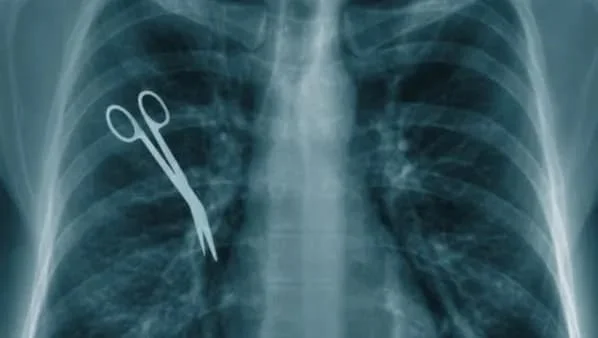
Surgery always carries risk — that’s not in dispute, and it’s why patients sign consent forms before every operation. But there’s a critical difference between a known risk that simply didn’t go your way, and a mistake that never should have happened in the first place. If you’re searching for a surgical error lawyer NYC patients can trust with something this serious, understanding that distinction is where every real case starts.
What Actually Counts as a Surgical Error?
Patient safety experts use the term “never events” for a reason — these are mistakes that, by definition, should never occur if proper protocols are followed. The National Quality Forum formally recognizes a specific list of surgical never events, and they’re a useful starting point for understanding what separates a real error from an unfortunate outcome:
- Surgery performed on the wrong body part
- Surgery performed on the wrong patient entirely
- The wrong surgical procedure performed on a patient
- A surgical sponge, clamp, or other instrument left inside the patient after closing
- Intraoperative or immediate postoperative death in a patient who was healthy going into surgery
These errors don’t include surgeries that were unsuccessful even though the surgical team did everything correctly. That distinction matters, because it’s precisely what an independent medical expert has to sort out before any surgical malpractice attorney can build a real case.
Anesthesia Errors: The Most Common Surgical Malpractice Claim We See
If there’s one category that comes up more than any other, it’s anesthesia. An anesthesia malpractice lawyer sees a wide range of mistakes — incorrect dosage, failure to properly monitor vital signs during the procedure, improper intubation, or a delayed response when something starts going wrong. An anesthesia error lawyer typically has to reconstruct exactly what happened minute by minute during the procedure, since anesthesia complications often unfold quickly and the anesthesiologist’s own notes become critical evidence.
Anesthesia Awareness: When the Sedation Doesn’t Fully Work
An anesthesia awareness lawsuit involves one of the more disturbing scenarios in this area of law: a patient becomes conscious, or partially conscious, during surgery while paralyzed by anesthesia and unable to move or communicate. Picture this scenario, which is more common than most patients realize: a dosage calculation is based on outdated weight information, or the anesthesiologist is monitoring multiple patients at once and misses the early signs that sedation is wearing off. The patient can feel the procedure but can’t alert anyone — and often develops lasting psychological trauma from the experience, even without any physical injury from the surgery itself.
Wrong-Site Surgery
A wrong site surgery lawyer handles cases that sound almost unbelievable until you see how often the underlying cause is the same: a breakdown in a pre-surgical verification process that’s supposed to catch this specific kind of mistake before it happens. Most hospitals require a “time-out” before the first incision, where the surgical team confirms the patient, the procedure, and the site out loud — a wrong site surgery lawsuit often centers on proving that step was skipped or rushed.
Retained Foreign Objects After Surgery
A foreign object left in body lawsuit typically involves a sponge, clamp, or other surgical instrument that wasn’t accounted for during the post-surgery instrument count. Here’s how this tends to play out: a patient goes home after what seemed like a successful procedure, then develops unexplained pain, fever, or swelling weeks later. An X-ray finally reveals a surgical sponge still inside them, requiring an entirely separate surgery just to remove it — on top of whatever infection or complication developed in the meantime.
Unnecessary Surgery Claims
An unnecessary surgery lawsuit is a different kind of case entirely — it’s not about a mistake made during a needed procedure, but about a procedure that shouldn’t have been performed at all. These claims often surface when a second opinion or later diagnosis reveals that the original surgery was based on a misdiagnosis, or that a less invasive treatment option was available and never discussed with the patient.
What Compensation Can You Recover After a Surgical Error?
- Costs of corrective surgery or additional treatment needed to fix the original error
- Extended hospital stays and rehabilitation beyond what the original procedure required
- Lost income during an extended, unplanned recovery
- Long-term disability or permanent reduction in quality of life
- Pain and suffering tied to both the physical injury and the experience itself
- In the most severe cases, lifetime care costs
Recent Surgical Error Case Results
Real numbers give a better sense of case value than any general estimate could:
| Case Type | Location | Amount Recovered |
|---|---|---|
| Wrong-site surgery | Brooklyn, NY | $8,900,000+ |
| Hospital error settlement | New York City, NY | $7,200,000+ |
| Anesthesia error lawsuit | Manhattan, NY | $6,700,000+ |
| Surgical infection claim | Queens, NY | $5,400,000+ |
| Spinal surgery claim | Brooklyn, NY | $5,100,000+ |
| Retained foreign object case | Bronx, NY | $4,900,000+ |
Results vary based on the facts of each case. Prior results do not guarantee future outcomes.
What You Need to Prove in a Surgical Error Claim
A successful surgical malpractice claim generally requires establishing four things: that a doctor-patient relationship existed and created a duty of care, that the surgeon or medical team breached that duty by deviating from the accepted standard of care, that the breach directly caused real harm (not just an unwanted outcome), and that measurable damages resulted. This almost always requires an independent medical expert to review the case and confirm the deviation from accepted standards — a step every medical malpractice case in New York formally requires before it can move forward.
How Long Do You Have to File in New York?
The medical malpractice statute of limitations NY sets for most cases is two and a half years from the date of the malpractice, and this applies to surgical error claims as well. There’s an important exception worth knowing: the “foreign object rule.” If your case involves an object left inside your body, the clock can start from the date you discovered it — or reasonably should have discovered it — rather than the date of the original surgery, which matters enormously in cases where symptoms don’t show up for months.
Choosing a Surgical Error Attorney in New York
A surgical error attorney New York patients choose for something this serious needs a real track record, not just a promise to fight hard. At our firm, a surgical error lawyer has recovered $8.9 million in a wrong-site surgery case in Brooklyn, $6.7 million in an anesthesia error lawsuit in Manhattan, $5.4 million in a surgical infection claim in Queens, and $4.9 million in a retained foreign object case in the Bronx. A surgical error lawyer New York families trust with a case like this should be working with independent medical experts from day one, not waiting until the insurance company pushes back to bring one in.
Every surgical malpractice attorney New York clients speak with at our firm builds each case as though it’s heading to trial, which gives us the leverage that pushes hospitals and their insurers toward fair settlements.
Serving Patients Across NYC
Patients search for us using every version of this — a surgical error lawyer Brooklyn patients recommend after a botched procedure, a surgical error lawyer Bronx residents call after a retained instrument was discovered, a surgical error lawyer Queens patients trust with a serious anesthesia claim — and our office represents patients across every borough regardless of how they found us. Every surgical error attorney NYC families reach out to starts with the same offer: a free, no-obligation case review.
If Something Felt Wrong After Your Surgery, Here’s Your Next Step
Trusting that something isn’t right after a procedure is usually worth taking seriously, even when it’s hard to put into words exactly what feels off. Contact us any time, day or night, for a free and confidential case review. There’s no cost to find out whether what happened to you was preventable, and no fee unless we recover compensation for you.
Frequently Asked Questions
-
I signed a consent form — can I still sue?
Yes. A consent form covers the known risks of a properly performed procedure. It does not protect a surgeon or hospital from liability for negligence, a preventable mistake, or a "never event."
-
What if I don't find out about a retained object until years later?
New York's foreign object rule generally allows you to file within one year of discovering the object, even if that's well beyond the standard two-and-a-half-year statute of limitations for medical malpractice.
-
Is the surgeon personally liable, or is it the hospital?
It can be either, or both, depending on whether the surgeon was a hospital employee or an independent contractor, and whether the error involved hospital staff, protocols, or equipment.
-
How do I know if my outcome was a known risk or an actual error?
This requires an independent medical expert to review your records and compare what happened against the accepted standard of care for your specific procedure — which is exactly the first step in evaluating any potential case.
-
What's the difference between an anesthesia error and a normal reaction to anesthesia?
A normal reaction is a known, disclosed risk that occurs even with proper care. An anesthesia error involves a deviation from proper protocol — incorrect dosing, inadequate monitoring, or a delayed response to warning signs — that a competent anesthesiologist should have avoided.
-
Can I sue for an unnecessary surgery even if it was "successful"?
Yes. If the surgery shouldn't have been performed at all — based on a misdiagnosis or without disclosing a less invasive alternative — you may have a claim regardless of how technically well the unnecessary procedure was carried out.
-
How much does it cost to hire a surgical error lawyer?
Nothing upfront. We work on a contingency basis, meaning you pay no attorney fees unless we recover compensation for you.

Oleg Rybak
Personal Injury Attorney, Brooklyn, New York | Founder of The Rybak Firm, PLLC