


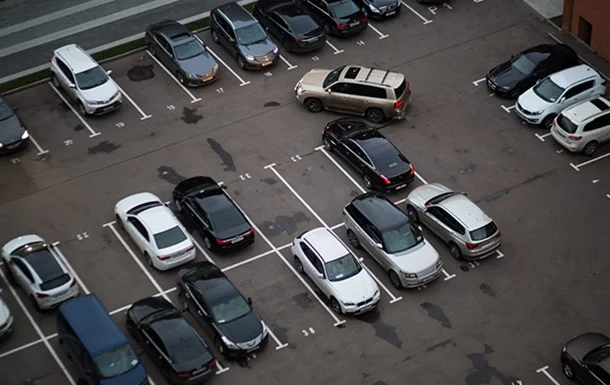
Parking lots feel like a gray area – no lane markings to follow strictly, everyone moving slowly, cars backing out from every direction. So when a car accident in a parking lot happens, it’s no surprise that both drivers often insist the other one was wrong.
The good news: parking lots aren’t actually a legal free-for-all. Most jurisdictions apply a set of right-of-way rules to private lots, and parking lot accident fault is usually determined the same way fault is determined anywhere else – based on who failed to yield, who had the right-of-way, and who was paying attention. Here’s how it actually breaks down.
Are Parking Lot Accidents “No Fault”?
A common misconception is that parking lot accidents are no fault simply because they happen on private property. That’s not accurate. While a parking lot may not be a public road, parking lot accident laws in most states still apply general traffic and negligence principles – meaning one driver can absolutely be found more responsible than the other, just as on any street.
What does change in a parking lot is the evidence. There’s rarely a police report, traffic cameras are inconsistent, and “he said/she said” disputes are common – which is exactly why documenting the scene matters so much (more on that below).
The Two Types of Lanes – and Why They Matter
To understand who is at fault in a parking lot accident, it helps to know that most lots have two distinct types of traffic paths:
- Main/access lanes – the wider lanes that connect the parking lot to the street, where cars enter and exit the lot.
- Feeder lanes – the narrower rows running between parking spaces, where cars drive to find or leave a spot.
As a general rule, traffic in main lanes has priority over traffic in feeder lanes, and any car in motion in a lane generally has priority over a car that is stopped, parked, or pulling out of a space. Posted stop signs, yield signs, and arrows still apply and can override these defaults.
Common Parking Lot Accident Scenarios and Who’s Usually at Fault
Insurance adjusters tend to rely on a handful of recurring scenarios. One of the most commonly searched situations — who is at fault in parking lot accident backing up — actually covers two different scenarios below, depending on whether one or both cars were reversing. The table breaks down how parking lot accidents who is at fault is typically assessed in each case:
| Scenario | Likely At-Fault Party | Why |
| Car backs out of a spot and hits a moving vehicle | Driver backing out | Drivers leaving a space must yield to traffic already moving in the lane |
| Both drivers backing out of spots at the same time | Shared fault (often 50/50) | Neither driver had the right-of-way; both had a duty to check surroundings |
| Driver pulls out of a spot into a feeder lane and is struck | Driver pulling out | Vehicles already in the lane have priority over those entering it |
| Two cars collide turning into the same open spot | Driver who cut across opposing traffic | The driver crossing into oncoming traffic typically owes the duty to yield |
| Driver rear-ends a car stopped at a stop sign | Driver who rear-ended | Stopped/stationary vehicles following signage are rarely at fault |
| Pedestrian struck while walking through a feeder lane | Usually the driver | Drivers must watch for pedestrians throughout the lot, even outside marked crosswalks |
Pulling Out of a Parking Spot: Where Most Disputes Happen
Pulling out of a parking spot accident claims are some of the most contested – largely because both drivers often genuinely believe they had the right-of-way. If you’re the one leaving a space (whether pulling forward or in reverse), the expectation is that you check mirrors, blind spots, and the lane in both directions before moving, and yield to anything already in motion.
That said, fault isn’t always one-sided. If the other driver was speeding through the feeder lane, had headlights off in low light, or was clearly distracted, that can shift partial responsibility back onto them – which is where dashcam footage or nearby store cameras often become the deciding factor.
What to Do If Someone Hits Your Car in a Parking Lot
If someone hits your car in a parking lot, what you do in the next few minutes can shape how the claim plays out – especially since there’s often no officer to write a report establishing fault for you.
- Move to safety if possible, but try not to move the vehicles before taking photos if it’s safe to leave them in place briefly.
- Photograph everything – both vehicles’ positions, damage, license plates, the lane markings, and any relevant signage (stop signs, arrows, “yield” markings).
- Look for witnesses or cameras – nearby stores, parking garages, and even other parked cars sometimes have dashcams that capture the moment of impact.
- Exchange information – insurance details, license plate, and contact information, even for a minor parking lot fender bender.
- Report it to your insurer, describing only what you observed – avoid guessing at fault percentages or apologizing, which can be used against you later.
- Keep records of any injury or vehicle damage, even if it seems minor – some damage and soft-tissue injuries aren’t obvious immediately.
When Fault Is Shared – and Why It Still Matters
Plenty of parking lot collisions end up with shared fault, especially when both vehicles were in motion (like the classic “both backing up” scenario). Shared fault doesn’t mean no one pays – it usually means the settlement is adjusted based on each driver’s percentage of responsibility under your state’s comparative negligence rules.
This is also where having a clear, well-documented account of the accident in a parking lot matters most. Insurance adjusters for both sides will be working from incomplete information, and the driver who shows up with photos, witness names, and a clear timeline tends to come out with a more favorable fault determination – even in a 50/50-looking situation.
Talk to an Attorney Before Accepting a Fault Determination
Insurance companies sometimes assign fault percentages quickly, based on limited information, and those initial determinations aren’t always final – or correct. If you’ve been injured, if vehicle damage is significant, or if the other driver’s insurer is pushing a fault split that doesn’t match what actually happened, it’s worth having an experienced car accident attorney review the details before you accept any settlement or sign anything.
A quick, free case review can clarify where you actually stand, what evidence could change the outcome, and what a fair resolution looks like – reach out to a local personal injury law firm to walk through what happened while the details are still fresh.